Rank for the searches that are ready to buy
Search intent is the "why" behind a query. Map every keyword hot, warm or cold before you write a word, and you'll stop producing content that ranks but never converts.
What's search intent in SEO?
Search intent is the goal a searcher has when they type a query. To learn, to compare, to find a site, or to buy. Google ranks the page that best satisfies that intent, regardless of who "deserves" it. Optimising a page against the wrong intent is the most common reason content ranks nowhere.
The 4 types of search intent
- Informational: "what are seed keywords" wants an answer
- Commercial: "best keyword clustering tool" wants a comparison
- Transactional: "role seo pricing" wants to act
- Navigational: "google search console login" wants a specific place
Hot, warm, cold: the working intent map
The 4-type taxonomy is fine for textbooks. For planning a content calendar, temperature is faster:
- Hot: ready now. Transactional and high-commercial queries. Buyer intent keywords like "X vs Y", "X pricing", "best X for [niche]". Build these pages first. Smallest traffic, biggest revenue.
- Warm: comparing. Commercial-investigation queries. They know the problem, they're shortlisting solutions. Comparison pages, use-case pages, alternative pages that lay out the tradeoffs.
- Cold: learning. Informational queries. Highest volume, longest payback. Their job is trust and retargeting, not conversion. Measure them accordingly.
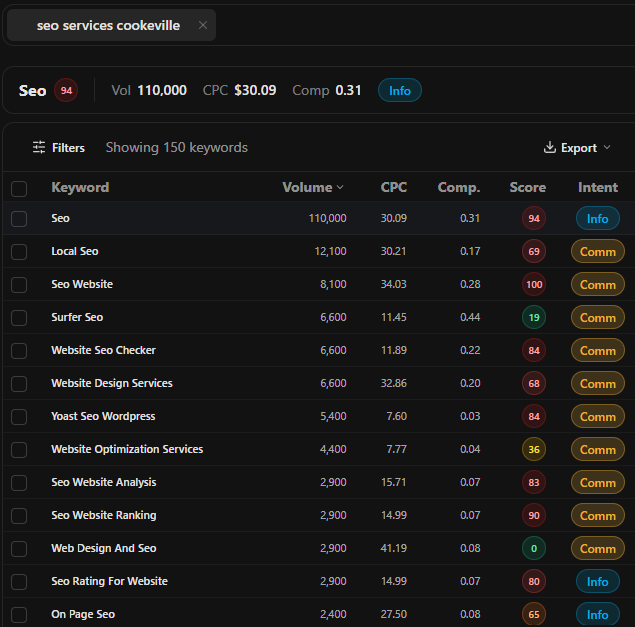
Run the workflow with the Role SEO MCP:
Using the Role SEO MCP: research keywords for "[your topic]" and group
results into hot (transactional/commercial), warm (comparison), and
cold (informational). Recommend which 5 hot pages to build first.
Search intent FAQ
Why does search intent matter for SEO?
Because Google ranks pages that satisfy intent, not pages that mention keywords. A perfectly optimised page against the wrong intent can't win. Read the SERP and you'll see the intent Google's decided the query carries.
What are buyer intent keywords?
Queries that signal someone's ready to buy. "pricing", "vs", "alternative", "best X for Y", "discount". Low volume, high competition per click, and still usually your best ROI, because the searcher arrives pre-sold.
How do I check the search intent of a keyword?
Search it. The current top 10 is Google's answer. If it's all listicles, the intent is commercial comparison. If it's all docs and definitions, the intent is informational. Role SEO also auto-labels intent on researched keywords in most countries.
Run this strategy in Role SEO
Run the MCP prompt in this guide with Role SEO. Role SEO is open source, free to try, and does not require a credit card.